Author page: lisa

A flight on the wild side

By Chloe Greenbank

As head of Virunga National Park’s Air Wing programme, Anthony Caere is a pilot with a plan – to protect the park and the animals living in it one flight at a time.

t’s not every day you come across a chimpanzee in the cockpit, but for Anthony Caere it’s not that unusual. Head of Virunga National Park’s (VNP’s) Air Wing programme, the 43-year-old Belgian born pilot has been living in the Democratic Republic of Congo (DRC) for the last 11 years.

“I came originally to work as a pilot on a television documentary about flying doctors. It was on this trip that I met the conservationist and anthropologist Emmanuel de Merode, the director of VNP, and we donated the Cessna 206 we were using to his project.”

There was one small snag. Merode needed a pilot. “He asked me if I wanted to stay and that was that!” Caere told African Aerospace. “We started up VNP’s Air Wing with one Cessna 206 to help monitor and protect the park and the wildlife living in it. We now have 10 aircraft, thanks in large part to the support of US-based non-profit organisation, Last Chance for Animals (LCA).

In addition to the Cessna 206, Air Wing’s fleet includes a Cessna 182 and Bat Hawk aircraft.

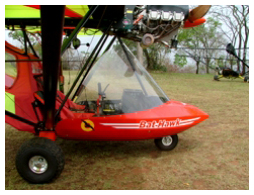
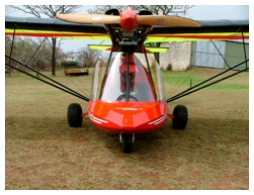
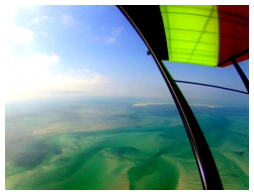
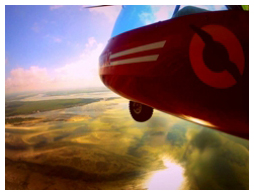
Designed with surveillance and conservation work in mind, the Bat Hawk’s half open cockpit is similar to that of a helicopter and provides excellent forward visibility either side of the cockpit.

Alongside a handful of expats, some of VNP’s rangers have now also been trained as pilots. “Following a rigorous selection process, we currently have three Congolese pilots working for the Air Wing.

“We’re also looking to build additional airstrips and incorporate modern technology in our aerial surveillance work, including the use of Artificial Intelligence to help identify, gather and analyse data on wildlife populations more efficiently.”

As head of the Air Wing, Caere’s typical day involves a fair amount of administration and scheduling of flight operations. He is also tasked with overseeing maintenance of the Bat Hawks and securing spare parts.

Given the Bat Hawks ability to land in remote locations on air strips of just 250-300m long, the aircraft are also used to transport equipment and supplies, as well as for medical evacuations.

Caere noted that medical emergencies can range from rescuing rangers from rebel attacks to injuries from snake bites.

“Time is of the essence when getting these victims to safety, so medevac services are at the core of our work,” he said, revealing he has lost 72 colleagues in the last 11 years.

Some of the aircraft are also equipped with a large DJI – Matrice drone and cameras which are used to take pictures every three to five seconds of the ground below. These thousands of images are then stitched together to provide a crystal-clear, high-definition image of the park.

“We often rescue orphaned infant chimpanzees. They are traumatised, as most if not all of their family will have been killed in order to get just one baby, which if it’s smuggled out of the country can be sold for as much as US$20,000.

“So, before we fly them off to safety, we spend time with them to form a bond and keep them calm.

“They are like human babies, so once you’ve built up that trust, it’s easy to wrap them in a blanket and keep them safe and warm in the cockpit with you,” he said.

Being an Air Wing pilot in VNP is certainly not for the feint hearted. “We operate in extremely challenging and frequently dangerous situations,” said Caere. “Often the airstrips themselves are short and difficult to land on.”

Given his time again, would Caere have pursued a more conventional career as a commercial pilot? “Since I was a child, the only thing I ever wanted was to fly and work with animals. So, for me my work is a dream come true.”

It’s a job he was clearly destined for as he concluded: “Nothing is more enjoyable than flying a Bat Hawk at a low altitude over the VNP with a big herd of elephants below, the sun setting on the horizon and music blasting through my Bose headset!”

https://www.timesaerospace.aero/features/general-aviation/a-flight-on-the-wild-side

Anglo American Platinum donates Bat Hawk aircraft to SANParks

Anglo American Platinum donates Bat Hawk aircraft to SANParks

5 Sep 2023 14:00Publicity 655

South African National Parks (SANParks) has announced that Anglo American Platinum has donated a second Bat Hawk aircraft to assist in anti-poaching efforts across South Africa, which has seen a 78% decrease in rhino poaching. The Bat Hawk will go to SANParks’ Addo Elephant National Park in the Eastern Cape.

Anglo American Platinum donates Bat Hawk aircraft to SANParks

According to SANParks, this donation builds on 2022’s donation of four Bat Hawk surveillance aircraft to SANParks to aid surveillance, conservation and anti-poaching efforts in the Kruger National Park. 

In addition, a Bat Hawk aircraft will be donated to Mapungubwe National Park, located on the border of South Africa, Botswana and Zimbabwe.

Prakashim Moodliar, Anglo American Platinum’s executive head of projects, says, “I am pleased that our relationship with SANParks is growing from strength to strength with this donation. The Bat Hawks we have donated to Kruger National Park have been put to great use, assisting the SANParks team with rhino dehorning work, ongoing research, aerial visible policing and water point and soil erosion monitoring.”

Moodliar adds, “This work speaks directly to the healthy environment pillar of our sustainable mining plan and our ambition to have a net positive biodiversity impact — an ambition we can only achieve in partnership with key stakeholders such as SANParks.”

Addo Elephant National Park, which spans over 293 000 hectares, is home to one of the densest populations of African elephants in the world and is the only park in the world that can lay claim to the Big 7 (Elephant, Rhino, Buffalo, Lion, Leopard, Southern right whale and the Great white shark in the Addo Marine Protected Area). 

The Bat Hawk aircraft, assembled in Nelspruit, presents an affordable and safer alternative to helicopters and will assist with the Park’s conservation objectives. Other benefits of the aircraft include the cockpit’s excellent visibility, even during adverse weather conditions and its light undercarriage, which can easily manoeuvre through bush terrain.

SANParks managing executive of parks Property Mokoena says, “We are immensely grateful to Anglo American Platinum for yet another donation to SANParks and to Addo Elephant National Park and Mapungubwe National Park. They join several other international and local corporates and individuals working with SANParks to conserve and protect our natural and cultural heritage and threatened species.”

These Bat Hawk aircraft will go a long way in being a visual deterrent to would-be poachers. These ultra-light aircraft will also assist us in carrying out aerial patrols and monitoring and effectively managing the environment, not just over our terrestrial footprint, but over the Addo Marine Protected Area,” Mokoena adds. 

“We wish to thank Anglo American Platinum for their faith in us yet again to put their donated equipment to good use in protecting our country’s rich and varied biodiversity,” concludes Mokoena. 

For more information, visit www.sanparks.org. You can also follow SANParks on FacebookX or on Instagram.

https://www.mediaupdate.co.za/publicity/154607/anglo-american-platinum-donates-bat-hawk-aircraft-to-sanparks

SANParks records a 78% decrease in Rhino poaching

By Tsoku Maela

Building on last year’s donation of four Bat Hawk surveillance aircraft to South African National Parks (SANParks) to aid surveillance, conservation and anti-poaching efforts in the Kruger National Park, Anglo American Platinum this morning donated another Bat Hawk that will be going to SANParks’ Addo Elephant National Park in the Eastern Cape. In addition, a Bat Hawk aircraft will be donated to Mapungubwe National Park, which is located on the border of South Africa, Botswana and Zimbabwe.

The Kruger National Park’s experience with the four Bat Hawks Anglo American Platinum donated last year has been positive.

  • For instance, this time last year, the Malelane section of the Kruger National Park had lost 23 rhinos to poaching. As of today, the number has decreased to 5 rhinos since January this year.
  • Beyond this, the Bat Hawks have further contributed with ongoing research in the park. They are equipped with repeaters that pick up the tracking signals of animals that roam where there is no cell phone coverage. This signal is then relayed to the various research stations.
  • Furthermore, they have been used in locating wounded or snared animals that require medical attention, identifying the entry points that poachers use, providing aerial visible policing, as well as water point and soil erosion monitoring in the park.

Anglo American Platinum strengthens collaboration with SANParks through additional Bat Hawk light aircraft donations

Building on last year’s donation of four Bat Hawk surveillance aircraft to South African National Parks (SANParks) to aid surveillance, conservation and anti-poaching efforts in the Kruger National Park, Anglo American Platinum this morning donated another Bat Hawk that will be going to SANParks’ Addo Elephant National Park in the Eastern Cape. In addition, a Bat Hawk aircraft will be donated to Mapungubwe National Park, which is located on the border of South Africa, Botswana and Zimbabwe.

Speaking at the event to hand over the aircraft to Addo Elephant Park, Anglo American Platinum’s executive head of projects Prakashim Moodliar said, “I am pleased that our relationship with SANParks is growing from strength to strength with this donation. The Bat Hawks we have donated to Kruger National Park has been put to great use, assisting the SANParks team with rhino dehorning work, ongoing research, aerial visible policing, and water point and soil erosion monitoring. This work speaks directly to the healthy environment pillar of our Sustainable Mining Plan and our ambition to have a net positive biodiversity impact – an ambition we can only achieve in partnership with key stakeholders such as SANParks.

Addo Elephant National Park, which spans over 293,000 hectares, is home to one of the densest populations of African elephants in the world and is the only park in the world that can lay claim to the Big 7 (Elephant, Rhino, Buffalo, Lion, Leopard, Southern right whale and the Great white shark in the Addo Marine Protected Area). The Bat Hawk aircraft, which is assembled in Nelspruit, presents an affordable and safer alternative to helicopters and will go a long way in assisting with the Park’s conservation objectives. Other benefits of the aircraft include the cockpit’s great visibility, even during adverse weather conditions, and their light undercarriage, which can easily manoeuvre through bush terrain.

SANParks Managing Executive of Parks, Property Mokoena said: ‘We are immensely grateful to Anglo American Platinum for yet another donation to SANParks and to Addo Elephant National Park and Mapungubwe National Park. They join a number of other international and local corporations and individuals who work with SANParks to conserve and protect our natural and cultural heritage and our threatened species. These Bat Hawk aircraft will go a long way in being a visual deterrent to would-be poachers. These ultra-light aircraft will also assist us in carrying out aerial patrols as well as monitoring and effectively managing the environment, not just over our terrestrial footprint, but over the Addo Marine Protected Area as well. We wish to thank Anglo American Platinum for their faith in us yet again to put their donated equipment to good use in the protection of our country’s rich and varied biodiversity.’

https://www.getaway.co.za/travel-news/sanparks-records-a-78-decrease-in-rhino-poaching

Bat Hawk aircraft to boost Addo conservation efforts

Conservation efforts in the Addo Elephant National Park received a boost on Friday when Anglo American Platinum donated a Bat Hawk light aircraft to the park.

Anglo’s executive head of projects, Prakashim Moodliar, said in a statement that the aircraft donated to Kruger National Park has been assisting SANParks with rhino dehorning work, research, and aerial visible policing, among other functions.

“This work speaks directly to the healthy environment pillar of our Sustainable Mining Plan and our ambition to have a net positive biodiversity impact – an ambition we can only achieve in partnership with key stakeholders such as SANParks, he said.

SANParks Managing Executive of Parks, Property Mokoena said they were “immensely grateful to Anglo American Platinum” who also donated a Bat Hawk light aircraft to the Mapungubwe National Park.

She said they join a number of other international and local corporates and individuals who work with SANParks to conserve and protect our natural and cultural heritage and our threatened species.

“These Bat Hawk aircraft will go a long way in being a visual deterrent to would-be poachers,” she said.

Mokoena said “These ultra-light aircraft will also assist us in carrying out aerial patrols as well as monitoring and effectively managing the environment, not just over our terrestrial footprint, but over the Addo Marine Protected Area as well.

“We wish to thank Anglo American Platinum for their faith in us yet again to put their donated equipment to good use in the protection of our country’s rich and varied biodiversity.”

Addo Elephant National Park spans over 293,000 hectares and is home to one of the densest populations of African elephants in the world. “It is the only park in the world that can lay claim to the Big 7 (Elephant, Rhino, Buffalo, Lion, Leopard, Southern right whale, and the Great white shark in the Addo Marine Protected Area).”

https://www.algoafm.co.za/local/bat-hawk-aircraft-to-boost-addo-conservation-efforts

South African aeroplane company credits Brics with helping it win export orders

By: Rebecca Campbell Creamer Media Senior Deputy Editor

South African light sports aircraft manufacturer Bat Hawk Aircraft has credited South Africa’s membership of the Brics group as helping it win a major export order. Brics is the acronym for Brazil, Russia, India, China, and South Africa. The company is based in Nelspruit in Mpumalanga province.

“While our biggest aircraft importer in the continent is the Democratic Republic of Congo, followed by Botswana and Mozambique, we do export outside the continent as well,” explained Bat Hawk MD Terry Pappas. “We have footprints in the US and Australia. But our major breakthrough in the past five years has been with the Brics.”

Bat Hawk Aircraft has designed and manufactures the Bat Hawk two-seat, dual-control, light sports aircraft, for sporting but also training, surveillance and conservation purposes. Its seats are arranged side-by-side. It is a high-wing monoplane design, using conventional control systems – rudder, elevators, and flapperons (combined flaps and ailerons). Its single engine is mounted centrally on the wing leading edge, above and ahead of the pilots. The aircraft is specifically designed for African conditions.

No less than 80% of the material used in the manufacture of a Bat Hawk is sourced in South Africa. The remaining 20% comes from Austria, France and the US. The company employs 18 people and operates from two locations in Nelspruit.

The first, albeit small, export order from another Brics country followed the company’s participation in 2015 in an Outward Selling Mission (OSM) organised by South Africa’s Department of Trade, Industry and Competition (DTIC). That mission went to China and led to four Bat Hawk aircraft being exported there, basically for trial purposes.

“Our biggest break came in 2019 while we were on another OSM, to India, with the DTIC,” he reported. “We were able to secure a partnership and sign a contract to supply 200 Bat Hawk aircraft to Max-Link Adventure Sports Club that will see both companies benefit from the partnership. The partnership and export contract, which is valued at R50-million, will create over 100 jobs in India once the factory that we will be setting up there has been completed. The less labour-intensive components of the aircraft, that require specialised equipment, will be manufactured in South Africa, while the labour-intensive work will be done in India. Both countries have specialised skills and labour force to make the partnership a reality.”

The first two aircraft in this programme were both entirely assembled in South Africa and then shipped to India to act as prototypes for the factory there. They were sent to India “a few weeks ago”.

Bat Hawks, sponsored by mining house Anglo American Platinum, are currently being used for anti-rhino poaching surveillance patrols by South African National Parks. But the home market accounts for only about 7% of the company’s production, which last year came to more than 30 aircraft – a quantity that Pappas described as “very good”.

“We might in the future embark on a scope mission to Brazil to assess how we can enter that market and form partnerships with other companies there,” he stated. “Brazil has amazing aircraft builders that produce magnificent planes. They certainly do have the capability to supply other markets, but we also want to benefit from their expertise.” 

https://www.engineeringnews.co.za/article/south-african-aeroplane-company-credits-brics-with-helping-it-win-export-orders-2023-04-05

Protecting South Africa’s Rhinos

HOW THE TREADRIGHT BAT HAWK PATROLS THE SHAMWARI GAME RESERVE

By Lucille Sive

Lion World Travel has partnered with the Shamwari Game Reserve to provide a key tool in Shamwari’s fight against rhino poaching.

The plight of South Africa’s rhinos is something near to my heart. In the last four years alone poaching has destroyed an estimated 12 per cent of the rhino population. This startling statistic is why we all need to work together to protect this essential member of Africa’s Big 5. At Lion World Travel, we partner with conservation organizations in South Africa to ensure that the wild rhino population remains healthy and vibrant for generations to come. One of the partners that we are excited to be working with is the Shamwari Game Reserve.

Situated on 25,000 hectares of natural vegetation and located on South Africa’s Eastern Cape, Shamwari is home to stunning scenery and a diverse array of wildlife that includes big game such as lion, leopard, elephant, rhino and more. The reserve was founded in 1992 based on the principle that tourism and conservation can and should work together to support South Africa’s wildlife and local communities. To realize this vision for Shamwari, the reserve worked closely with renowned conservationists Dr. Ian Player and John Aspinall to build a reserve that focused on sustainable and responsible travel.

This vision continues to this day, where Shamwari has partnered with The Wilderness Foundation on a program to monitor and protect Shamwari’s animals, including endangered rhinos in the region. A crucial tool in the fight against rhino poaching has been aerial patrol with a small vehicle called the “Bat Hawk”. The Bat Hawk is a high wing monoplane that seats a crew of two. The rounded glass windshield allows both crew members to have uninterrupted views outside the aircraft, making it ideal for patrolling Shamwari’s vast area to track and protect the local rhino population.

Earlier this year, the TreadRight Foundation, a joint initiative between the Travel Corporation’s family of brands which includes Lion World, purchased the Bat Hawk to support Shamwari’s and the Wilderness Foundation’s Forever Wild Conservation program. And although the Bat Hawk’s movements are kept secret to ensure it is effective as possible at patrolling for poachers, we are very happy to know that it has significantly aided the Shamwari rangers in their anti-poaching efforts in the region.

Travellers visiting Shamwari for safari are encouraged to get involved with Shamwari’s mission to use travel to build a sustainable and responsible game reserve that actively protects wildlife. Our Tented Safari In Style itinerary, for example, includes a 3-night stay at the Shamwari Bayethe Lodge for a unique tented safari experience. We encourage all travellers on this itinerary to visit the Ian Player Rhino Awareness Centre and the Wildlife Rehabilitation Centre to get involved and learn more about the plight of Africa’s rhinos and the fantastic work that Shamwari continues to do to protect South Africa’s rhinos.

Article by – https://www.lionworldtravel.com/

New Bat Hawk for Pilansberg Wildlife Trust

Today our new Bat Hawk ZU-IUS, named Ikaneng, arrived in Pilanesberg. Thank you Terry Pappas for getting her ready in record time. Your work is amazing. Thanks also for the discount you give to conservation.

The Bat Hawk is sponsored by the Copehagen Zoo, Schopper Carts and the Pilanesberg National Park & Wildlife Trust.We sold our old one, Mofalodi a week or so ago as she had almost all the hours she could take on the engine. Thank you to Cop Zoo and Alexander for their continued support and passion. Both have been instrumental in making this project a success. That and our amazing dedicated Pilots working with us. Thank you Cameron Dobbie and Keaton Howes for fetching Ikaneng. I know you loved flying her here. The lads left yesterday for Nelspruit and flew Ikaneng here today. Landed her beautifully in 20 knot wind.

As you all are probably aware our Bat Hawk is critical in the protection and surveillance of the Pilanesberg Rhinos. She is our ‘eye in the sky’. And forms part of the Rhino Protection Unit. Ikaneng will go up every day. As did Mofalodi before her and Serate before that. It costs us a lot less to fly Ikaneng than hiring in a chopper, and she is always available. The Bat Hawk has the ability to fly low and slow which is precisely what is needed in Pilanesberg.

Article by – https://pilanesbergwildlifetrust.co.za/

ANTI-POACHING

PROJECT TYPE: ANTI-POACHING

PROJECT GALLERY

Elephant poaching in the greater Niassa National Reserve in Mozambique is at an all-time high, with an elephant poaching in the greater Niassa National Reserve in Mozambique is at an all-time high, with an average of two elephants lost each day to poachers. There are over 35,000 people living within the reserve – a unique situation particular to this area. The SATIB Conservation Trust, in collaboration with Wilderness Foundation has provided a 6 cylinder Jaribu Bat Hawk Light Sports Aircraft, to the Lugenda Wildlife Reserve, which forms part of the greater Niassa National Reserve in Mozambique.

AERIAL PATROLS & RESEARCH

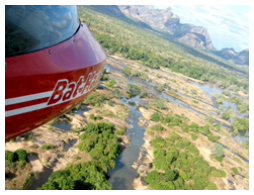
The Bat Hawk allows for general aerial patrols to give Section Rangers an incredibly accurate indication of what is happening in each section – large areas of land, parts of which are inaccessible by foot or vehicle. The Bat Hawk has also enabled the aerial surveillance of suspected poaching areas and the speedy location of the carcasses of animals which is essential in the apprehension of poachers. . Aerial boundary patrols help identify cross-border activity, such as new roads leading to boundaries, allowing for more accurate identification of potential poaching problem areas and camps or hiding places used by poachers.

In addition, the Bat Hawk assists research activities such as the monitoring of collared animals and rare species.

HOW YOU CAN HELP BY SUPPORTING SATIB CONSERVATION TRUST

The SATIB Conservation Trust working in collaboration with Wilderness Foundation, has financed a new Bat Hawk microlight aircraft to monitor movement of herds of elephants in Niassa and monitor anti-poaching movements on resident herds of elephants. The Trust has also provided insurance services and is looking to support ongoing research in the region.

Article byhttps://www.satibtrust.com/

Bat Hawk South Africa

The new South African Bat Hawk has been designed and developed by Micro Aviation South Africa primarily for surveillance and is the most affordable light sport aircraft on the market.
The Original BantamThe Micro Aviation B22 Bantam is a New Zealand “microlight aircraft” designed and produced by Max Clear in New Zealand.

The aircraft is supplied as a complete ready-to-fly-aircraft. The aircraft complies with the Fédération Aéronautique Internationale microlight rules as well as the United Kingdom BCAR Section ‘S’ regulations. It features a strut-braced high-wing, a two-seats-in-side-by-side configuration enclosed cockpit, fixed tricycle landing gear and a single engine in tractor configuration.

As a conventional 3-axis microlight, the Bantam does not rely on pilot weight shift to affect control. Twin seats are positioned side by side for full dual control and both crew members are well protected from the weather by an aerodynamic fibreglass pod and large wrap-around windshield.

Performance of the Bantam in its multiple options has been widely acclaimed as nothing short of sensational.

In the hands of a learner it remains perfectly balanced for fingertip control and hands off flight, but pushed to the maximum by an experienced pilot the maneuverability is breath-taking.
 Bat Hawk LSA – Big BrotherSeveral major design changes were incorporated into the Bat Hawk, which included a larger six-cylinder Jabiru engine with more substantial cheekplates and engine mountings and increased all up weight to 540 kg, stronger main gear, larger ‘bush’ tyres, improved brakes, increased fuel tank capacity to 80 / 100 liters, zip open / close luggage area, MGL EMS, stronger wing spars and wing struts, re-designed more streamlined nose pod and a much larger windscreen for improved visibility. Perhaps the most obvious visual change is the fact that the new larger windscreen is now positioned forwards of the front no.1 downtube, thereby creating a much roomier cockpit.

There is a big demand for this LSA aircraft in the surveillance and conservation industries and Micro Aviation believes that contrarily to what is published, the Bat Hawk is the only true ‘bush-plane’ on the market. “Other manufacturers advertise ‘bush planes’, but they all have propellers that are far too close to the ground, which are damaged by grass, sticks, stones and sand. On the other hand the Bat Hawk has its engine and propeller installed high up out of the ‘damage area’ and also very importantly,” out of the pilot’s line of sight”. All of the other supposed ‘bush planes’ have high instrument panels which severely limit and restrict outward visibility. The Bat Hawk’s cockpit is very similar to that of a helicopter with excellent forward visibility as well as to both sides. All parts and materials have been sourced in South Africa, fabricated and approved.
Test FlightsDuring flight tests conducted over the weekend of 1 December 2012, test pilot CC Pocock managed to pull 4 Gs during VNE tests, with maximum pull-up and climb testing. He entertained everyone with a magnificent display of loops, barrel rolls and stall turns in the Bat Hawk. All this was recorded on the G-meter, which was installed, as well as on the MGL S/D card. Wing loading tests up to 3000 kg on the Bat Hawk wing have been conducted and she carried it with ease.

The Bat Hawk is a delight to fly and like its ‘baby brother the Bantam’, needing zero rudder input while flying. There are no ‘excess yaw’ tendencies at all. She takes off in 50 metres and climbs out at 1200 feet/min with a 100kg pilot and full tanks at Nelspruit altitude at 3000 feet above mean sea level.

I had the opportunity to fly with Andrew to a nearby farm so that I could conduct the aerial photography from a Kitfox and I was convinced that the Bat Hawk presented similar flight characteristics to the Bantam, but with a more ‘solid feel’ due to the increased power to weight ratio and strengthened structure. Andrew says the Bat Hawk provides a much more solid feel with its thicker cheek plates, whilst the cruise speed has increased to 75 knots from the Bantam’s cruise speed of 65 knots using the same engine. Stall speed remains 35 knots, although with a single pilot and half tanks this comes down to 32 knots.

Multiple Roles

The Bat Hawk airframe is strong and durable, allowing it to be used in many roles. With the second seat available to take significant loads a number of Bat Hawks have been adapted for use in a variety of applications such as:
Game reserve aerial surveillance, where the type is particularly well adapted due to its very slow forward cruising speed, relative silence and stealth characteristicsFence checking and stock mustering on farmsAerial topdressing and sprayingAerial photography and surveyingReconnaissance and surveillanceRegular ranger patrols.Carcass location.Water-point monitoringMonitoring of rare speciesGathering of Scientific data for research purposes. Radio telemetry and chemical immobilization of animals.Anti-poaching and follow-up patrols.Patrolling rivers and gathering valuable data on crocodiles for the Kruger Park Scientific services.Monitoring and mapping burning programs in the Parks , including aerial burning of fire breaks with the Raindance Aerial Incendiary machine.Patrolling the Kruger/Mozambique/ Zimbabwe borders.Vegetation mapping and erosion monitoring.


Side by side seating, dual controls, comprehensive instrumentation and flying characteristics totally free of vices, make the Bat Hawk an ideal flight training aircraft. Due to the conventional 3-axis aircraft controls, the Bat Hawk is ideally suited for initial flight training towards a National Pilot’s Licence (LSA).

Bat Hawk-the most affordable light sport aircraft on the market

By Photos by Willie Bodenstein

The Bat Hawk, a conventional 3-axis light sport aircraft LSA, the most affordable light sport aircraft on the market, is supplied as a complete ready to fly aircraft. The aircraft complies with the ASTM2245 Build Standard rules and regulations as well as South African Civil Aviation Type Approval.

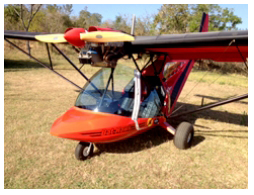
Designed and developed by Micro Aviation South Africa primarily for surveillance and conservation features for African conditions is a strut-braced high-wing, two-seats-in-side-by-side configuration open cockpit, fixed tricycle landing gear and a single engine aircraft in tractor configuration.


As a conventional 3-axis light sport aircraft LSA, the Bat Hawk does not rely on pilot weight shift to affect control. Twin seats are positioned side by side for full dual control and both crew members are well protected from the weather by an aerodynamic fibreglass pod and large wrap-around windshield.

Performance of the Bat Hawk in its multiple options has been widely acclaimed as nothing short of sensational. In the hands of a learner it remains perfectly balanced for fingertip control and hands off flight, but pushed to the maximum by an experienced pilot the manoeuvrability is breath-taking.

Several important designs are incorporated into the Bat Hawk, which include a 100 hp 4-cylinder Rotax® engine with substantial cheek plates and engine mountings and an all up weight of 540 kg, strong main gear, large ‘bush’ tyres, hydraulic disk brakes, large fuel tank capacity (80 litters), zip open / close luggage area, MGL Engine Monitoring System, strong wing spars and wing struts, streamlined nose pod and a large windscreen for improved visibility.

There is a big demand for this LSA aircraft in the surveillance and conservation industries and with the Bat Hawk’s propeller up and out of the way it reduces the risk of damage by grass, sticks, stones and sand making it a true “Bush Plane”.
 

The Bat Hawk’s cockpit is very similar to that of a helicopter with excellent forward visibility as well as to both sides. All parts and materials are sourced in South Africa, fabricated and approved.


The Bat Hawk air-frame is strong and durable, allowing it to be used in many roles. With the second seat available to take significant loads, a number of Bat Hawks have been adapted for use in a variety of applications such as game reserve aerial surveillance, where the type is particularly well adapted due to its very slow forward cruising speed, relative silence and stealth characteristics.


Other uses are: Fence checking and stock mustering on farms, aerial topdressing and spraying, aerial photography and surveying, reconnaissance and surveillance, regular ranger patrols, carcass location, water-point monitoring, monitoring of rare species, gathering of Scientific data for research purposes, radio telemetry and chemical immobilization of animals, anti-poaching and follow-up patrols, patrolling rivers and gathering valuable data on crocodiles for the Kruger Park Scientific services, monitoring and mapping burning programs in the Parks, including aerial burning of fire breaks with the Raindance Aerial Incendiary machine, patrolling the Kruger/Mozambique/ Zimbabwe borders and vegetation mapping and erosion monitoring.


Side by side seating, dual controls, comprehensive instrumentation and flying characteristics totally free of vices, make the Bat Hawk an ideal flight training aircraft. Due to the conventional 3-axis aircraft controls, the Bat Hawk is ideally suited for initial flight training towards a National Pilot’s Licence (LSA).

From left to right: Bat Hawk’s Terry and Andrew Pappas and Aero Club Chairman Paul Lastruci.

At the 2018 Aero Club of South Africa’s Awards Dinner Bat Hawk South Africa was presented with the PGS Trophy a fitting tribute to a company whose product and reputation has made it a household name in aviation circles not only in South Africa but also in continental Africa.